

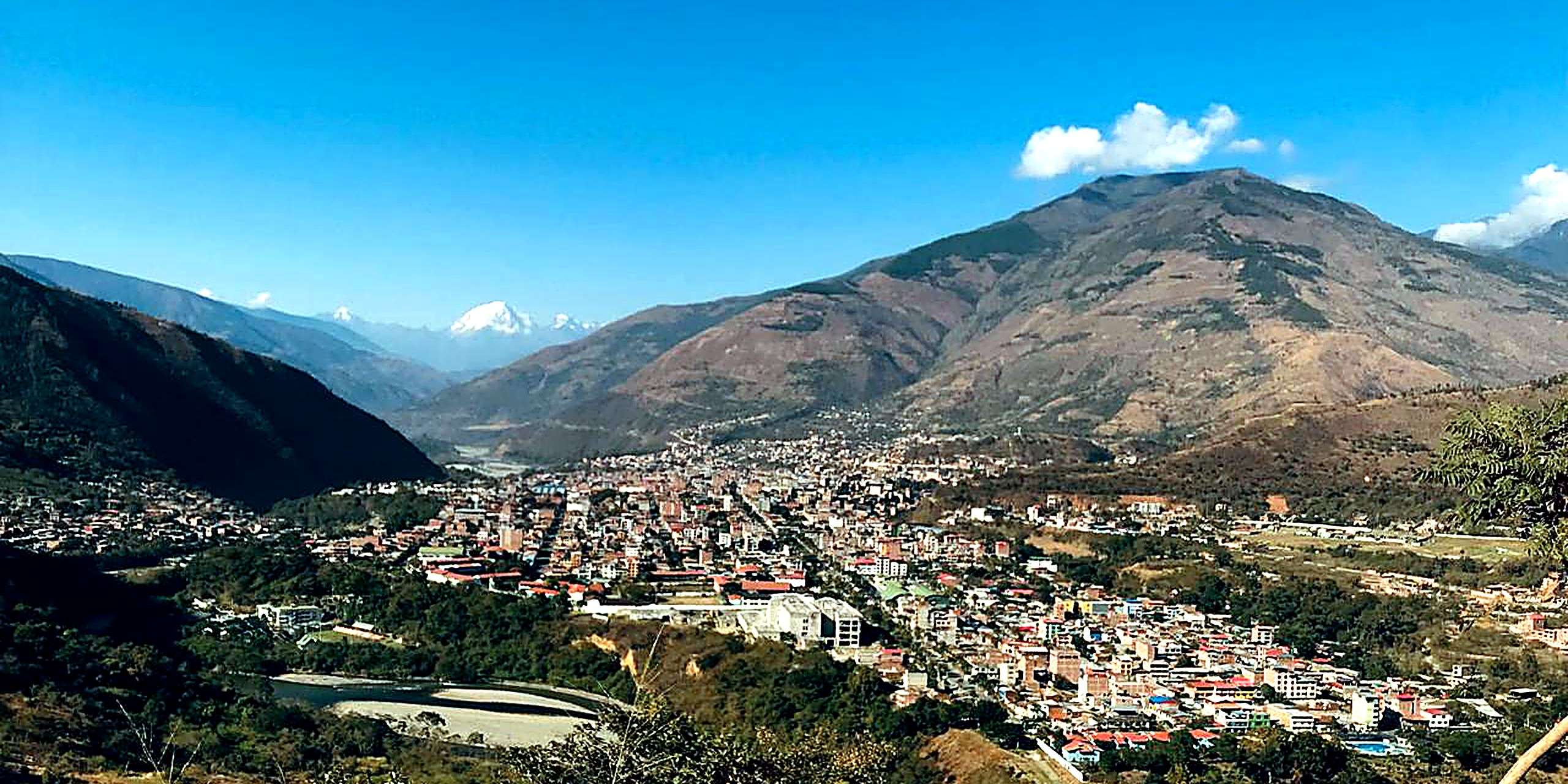
The History of La Convención: From Inca Resistance to Peru’s First Cooperative
: Saturday, 19 September, 2026 | BlogMost visitors know La Convención as the jungle province where Cusco’s coffee and cacao grow, but this valley’s history runs far deeper than agriculture. It was the Inca Empire’s last stronghold, the site of a hard-fought land struggle that reshaped Peru, and the birthplace of the country’s first agrarian cooperative. Here’s the story behind the valley.
**Before the Incas**
- Long before it was La Convención, this territory was known as Wilcapampa Yunca, home to groups like the Mañaríes, Pilcozones, and Izcaringas; peoples who made contact with the Inca civilization as it expanded toward Vilcabamba. Deeper into the jungle, along the Bajo Urubamba, the **Matsiguenga** people have lived for centuries and still do today, one of the Peruvian Amazon’s living indigenous cultures. Archaeological work elsewhere in the wider Cusco region, at sites like Yuthu, has also shown that Andean communities were already organized farmers and herders as early as the Formative Period (roughly 400–100 BC), participating in exchange networks that reached into these same jungle lowlands.
- That instinct for collective work has deep roots in the Andes, too. Long before the hacienda system disrupted it, land and labor were often organized communally, a tradition the Incas formalized through the **ayllu**, a kinship-based unit that became the basic building block of Inca society, economy, and land management. It’s a thread that, centuries later, would resurface in an unexpected place: the coffee valleys of La Convención.
**The Last Inca Stronghold**
- La Convención’s most dramatic chapter began in 1536, when **Manco Inca Yupanqui** rose up against the Spanish after a brief, uneasy alliance. After a major offensive that included a prolonged siege of Cusco from Sacsayhuamán, Manco was forced to retreat, first to Ollantaytambo, then deeper into the jungle. In 1539, he established a new, independent Inca state at **Vilcabamba (Espíritu Pampa)**, in what is now the Echarati district of La Convención.
- From there, Manco Inca and his successors, Sayri Túpac, Titu Cusi Yupanqui, and finally Túpac Amaru I, led Inca resistance for nearly four decades, preserving Inca government, language, and religion deep in the jungle, beyond Spanish reach. The resistance ended in 1572, when the Spanish viceroy Francisco de Toledo ordered an invasion of Vilcabamba, and Túpac Amaru I was captured and executed in Cusco’s main square, the final chapter of the Inca Empire.
- For centuries, the exact location of Vilcabamba was lost to history; even Hiram Bingham, who stumbled onto Espíritu Pampa in 1911 while searching for it, mistook Machu Picchu (which he found shortly after) for the real “Lost City.” It wasn’t confirmed as the true Vilcabamba until decades later, through the work of explorers like Gene Savoy. In 2022, Peru’s Congress formally recognized Manco Inca as a hero of the fight against colonialism, and declared Vilcabamba district the last bastion of Inca resistance.
**A Province of Extremes**
- La Convención was formally established as a province on July 25, 1857, under President Ramón Castilla. It remains the largest province in the Cusco region by far, covering roughly 47% of the department’s entire territory, spread across 16 distinct ecological zones that range from high Andean puna to dense Amazon rainforest. Elevation alone tells the story: the province spans from just 20 meters above sea level in the Bajo Urubamba jungle to 4,316 meters at the Abra Málaga pass, with **Quillabamba (1,050 meters)**, founded as the provincial capital on November 29, 1918, and elevated to city status in 1957, sitting comfortably in between.
**The Hacienda Era**
- After the conquest, Spain began granting land titles in La Convención as early as 1541, among the first grants in the region, just eight years after the fall of Cusco. Over the following centuries, the valley’s fertile land was consolidated into large haciendas, worked under a system of tenancy: families farmed a small plot in exchange for unpaid labor owed to the landowner, typically 10 to 25 days a month. Over time, as more tenant farmers, known as arrendires, arrived, some began subletting portions of their own plots to newer arrivals (allegados) under the same terms they themselves faced, creating a layered system of obligation that stretched from the hacienda owner all the way down.
**The Fight for the Land**
- The system began to shift in the mid-20th century, and coffee played an unexpected role. As malaria was brought under control in the late 1940s and new roads reached the valley, families returned to farm their plots, and increasingly turned to coffee, a crop well suited to smallholders and, unlike the hacienda’s traditional cacao, sugar cane, and tea, one the tenant farmers could grow and sell largely on their own terms. Coffee income gave families a degree of independence the old system had never allowed. (For more on how that crop went on to define the region, see our [short history of coffee in Cusco](https://tourscuscomachupicchu.us/short-history-of-coffee.html).)
- Between 1952 and 1962, tenant farmers filed 33 formal complaints against hacienda owners, primarily over excessive unpaid labor obligations and their right to freely sell their own harvest. In 1958, eight local unions joined to form the **Federación Provincial de Campesinos de La Convención y Lares**, uniting farm workers across the valley for the first time. The movement grew rapidly through the early 1960s, and by 1962 a valley-wide boycott was underway: tenant farmers refused to work for hacienda owners or pay rent on their plots.
- The government responded in stages: a 1962 presidential decree abolished the old unpaid-labor obligations, and by 1963, the state formally recognized tenant farmers’ de facto control of their parcels, arranging for them to purchase legal title directly rather than through the hacienda owners. In barely a decade, a system of land tenure that had defined the valley for roughly 300 years came apart, replaced by independent, coffee-growing smallholders. It was a shift that predated, and helped set the template for, Peru’s national land reform later in the 1970s.
**From Union to Cooperative**
- Out of that same movement came something else: Peru’s first agrarian cooperative, born from the coffee-farming unions of La Convención. That organizing eventually led to the founding of **COCLA (Central de Cooperativas Agrarias Cafetaleras)** on July 26, 1967, when a first group of coffee-growing cooperatives came together to secure fairer terms and a stronger voice for their members. Peru formally recognized cooperativism nationwide in that same era, with the Ley de Cooperativas (Law No. 15260) passed on December 14, 1964. In many ways, COCLA and the cooperatives that followed weren’t creating something new so much as reviving something old: the same spirit of collective land and labor the Incas had organized through the ayllu, centuries before.
- Today, COCLA brings together more than 20 first-tier cooperatives representing thousands of coffee-farming families across the valley, and its farms, most run by families of Inca heritage, at altitudes between 1,300 and 2,200 meters, are certified organic and fair-trade.
**The Valley Today**
- That history isn’t just something to read about; it’s still being written. Peru has grown into one of the world’s leading coffee exporters, with national coffee exports reaching nearly US$1.8 billion in recent years, cementing the country as a leader in organic specialty coffee. Here in Cusco, some 1,850 coffee-farming families across Calca and La Convención are working to grow their harvest by half over the next year. The cooperative model born in this valley over half a century ago isn’t a relic; it’s still how most of that growth happens.
- You can’t visit a museum for most of this history; it’s not behind glass. It’s in the working coffee and cacao farms of Huayopata and the surrounding valley, in the cooperative structures that still organize the harvest, and, for the more adventurous, in the jungle ruins of Espíritu Pampa itself. Walking those farms today means walking through all of it at once: the ayllu, the hacienda, the strike, and the cooperative that came after. At Cocla Tours, we make it easy to experience this living history firsthand: explore our coffee and cacao farm experiences here to meet the families behind the harvest.
**Sources**
- UNESCO World Heritage Centre
- Peru’s Ministry of Culture (Dirección Desconcentrada de Cultura Cusco)
- Instituto de Estudios Peruanos (IEP), *El Movimiento Campesino en La Convención*, Wesley Craig (1968)
- Centro Bartolomé de las Casas (CBC)